
4. Eligibility
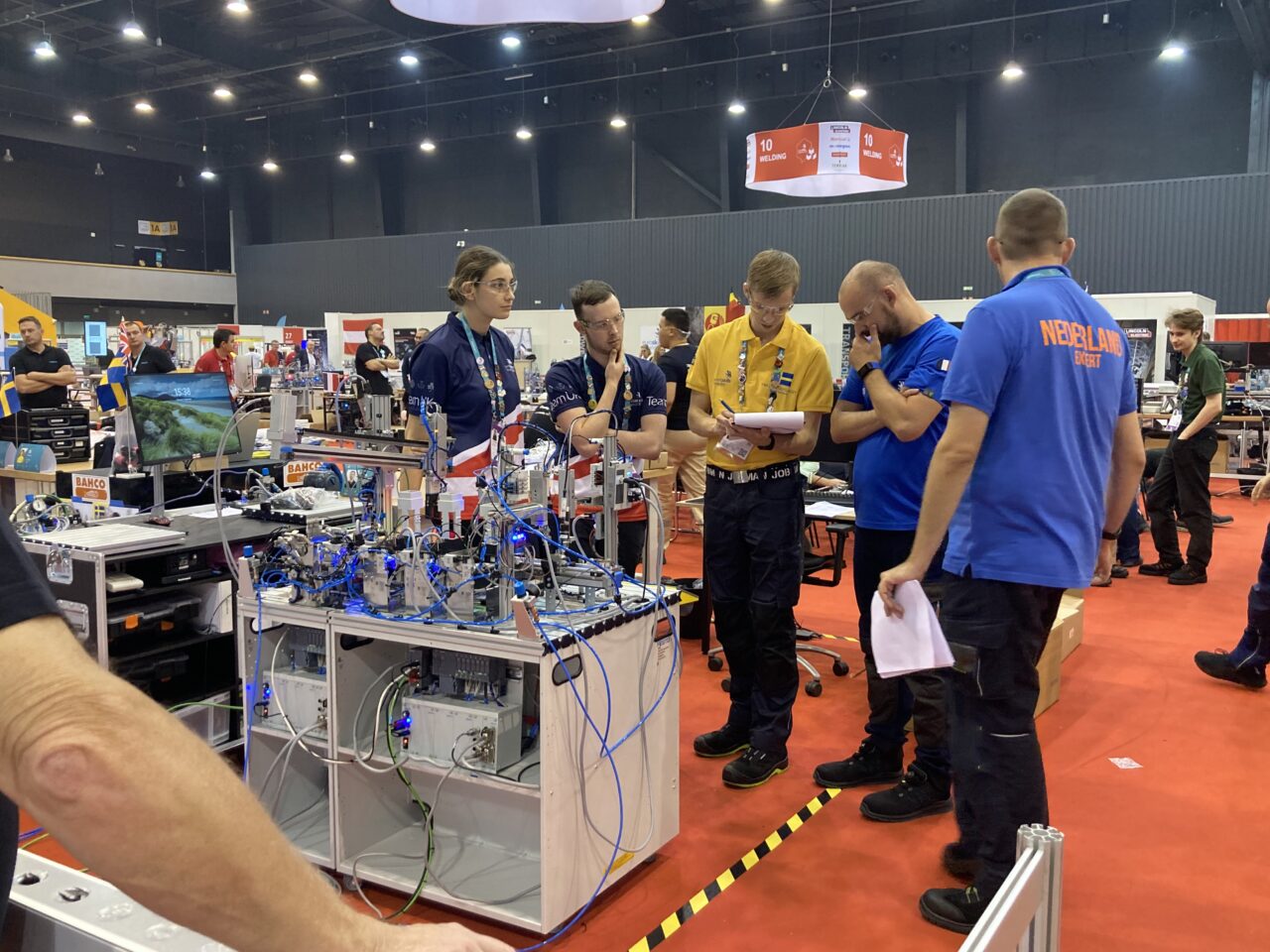
This section includes all the information on eligible organisations, mobilities, durations, participants and costs for the FE and VET sector. Information about other sectors can be found in the relevant sector’s Pathway 1 Guide.
4.1. Project duration
The duration for Pathway 1 2026 projects is 12 months. This is the final year of Taith funding so all projects must be complete by 31 August 2027. Please make sure you are able to complete your planned activities within this timescale.
Please ensure you understand the visa requirements of the country(ies) to which you plan to send your participants and allow sufficient time for the visa application process (where relevant).
Taith is unable to provide advice on visas or provide support with visa applications.
4.2. Eligible organisations
An organisation can apply only once per sector for each Pathway funding call. You should ensure that multiple applications to the same Pathway funding call are not submitted by different parties in the same organisation. Organisations which work across more than one sector can submit one application per sector if they meet the eligibility criteria for those sectors.
Organisations can apply individually or as part of a Consortium (group) of organisations. All organisations involved in the consortium must meet the eligibility criteria shown below.
Individual participants are not eligible to apply directly to Taith.
4.2.1 Organisations who can apply for Taith (FE and VET sector):
FE
- any public organisation regulated or registered in, and operating from, Wales active in the field of further education, and which offers a range of courses at different levels within the Credit and Qualifications Framework for Wales, leading to accredited qualifications
- national, regional or local co-ordinating bodies operating within Wales and overseeing the provision of further education
- consortium of not-for-profit organisations/providers, which comprises a single lead organisation applying on behalf of two or more further education providers, in the field of further education. All members of the consortium must be regulated or registered in, and operating from, Wales. Consortium partners must be agreed and named at the point of application and it is not permitted for the lead organisation to charge a fee to consortium partners for inclusion in the bid
For-profit organisations and sole traders are not eligible to apply or be named as consortium partners. You should refer to the Taith eligibility guidance to confirm if your organisation satisfies the eligibility requirement that it does not operate for profit.
VET
Any public or not-for-profit organisation regulated or registered in, and operating from, Wales, active in the field of vocational education & training, which offer a range of courses, leading to accredited qualifications, including:
- national co-ordinating bodies operating within Wales and overseeing the provision of education or training in the field of vocational education and training
- non-governmental not-for-profit organisations, social enterprises and other not-for-profit organisations, including but not limited to registered charities and charitable incorporated associations, community interest companies and companies limited by guarantee that do not operate for a profit and are hosting, training or otherwise working with learners and apprentices in vocational education and training
- consortium of not-for-profit organisations/providers, which comprises a single lead organisation applying on behalf of two or more vocational education and training providers, in the field of vocational education and training. All members of the consortium must be regulated or registered in, and operating from, Wales. Consortium partners must be agreed and named at the point of application, and it is not permitted for the lead organisation to charge a fee to consortium partners for inclusion in the bid
For-profit organisations and sole traders are not eligible to apply or be named as consortium partners. You should refer to the Taith eligibility guidance to confirm if your organisation satisfies the eligibility requirement that it does not operate for profit.
We’re always happy to help advise if you would be eligible for funding. If you’re not sure and you want to check your sector eligibility, please contact us at enquiries@taith.wales
4.2.2 International organisations your project can partner with:

Your organisation can generally send participants to the following international organisations outside of the UK and the Crown Dependencies. (Where introductory group mobilities are necessary, your organisation can send participants to organisations in Wales and the rest of the UK):
- any public or private organisation active in the field of vocational education and training recognised and regulated by competent authorities of the country within which the provider is operating and incorporated and/or domiciled
- any public or private organisation active in the labour market or in the fields of vocational education and training
Orphanages are not eligible international partner organisations.
4.3. Eligible mobilities, participants, and the funding we can provide
If your organisation is eligible to receive funding, then it’s important that you check that the people you want to send on a mobility are also eligible. There are different requirements for different mobilities so please check the relevant options available. The participant eligibility details assume your organisation is eligible to receive funding within this sector. If you are unsure whether your organisation or participants are eligible, please contact us at enquiries@taith.wales. At least 25% of learners or young people taking part in the planned project must be from underrepresented groups and you will be expected to demonstrate that you will meet this target within your application.
If learners or young people aren’t participating in the project, you will need to explain why this is not possible and how your proposed project will create immediate and lasting benefits for learners or young people, in particular those from underrepresented groups.
Grant rates and eligible cost can be found in section 5.
Please note that Taith funding is a contribution towards the costs associated with going on an international learning exchange.
4.3.1 Learner Activities
Group Mobilities
Group mobilities: Minimum 3 days – maximum 4 weeks.UK based introductory group mobilities: Minimum 3 days – maximum 5 days.
A group mobility is an opportunity for groups of at least 3 FE/VET learners to experience an international learning exchange, accompanied by staff who can support them and guide the learning experience. Staff from the organisation must accompany the learners for the entire duration of the activity. If needed, other adults may also act as accompanying persons to support the accompanying staff. Activities must have clearly defined learning outcomes. Learning can be formal, informal or non-formal, but must involve exchange and collaboration with peers from an international partner organisation, enabling learners to develop skills, competencies, intercultural awareness and understanding.
Mobilities which do not involve exchange with peers from another country/ies are not eligible for funding.
Introductory group mobility: These are short UK based introductory mobilities which are possible as part of a progression to an international mobility, where applying organisations feel that an international mobility would otherwise not be achievable. Applications for funding which include introductory group mobilities, must also include an international group mobility for the same intended participants. You should explain in the application why a UK based introductory mobility is essential to enable your learners to take part in an international mobility opportunity.
Introductory mobilities are only eligible for learner group mobilities.
Eligible costs
Funding available from Pathway 1 (Learners and accompanying persons):
Detailed information on eligible costs and grant rates can be found in section 5.
- a subsistence grant (for accommodation, food and any other costs when you are at your international destination)
- a travel grant
- 100% of actual costs for additional travel related costs for participants from disadvantaged backgrounds (you can apply for this once your project has started)
- 100% of actual identified inclusion costs for Disabled people and people with additional learning needs (you can apply for this once your project has started)
- organisational support grant for each outward (and inward) participant
Eligible participants
Learners:
- FE learners engaged with learning activities and enrolled on an accredited programme at an eligible FE college.
- HE learners undertaking HE provision within a FE institution
- VET learners engaged with learning or training activities and enrolled at a VET provider.
A group mobility should consist of at least 3 learners.
Accompanying persons:
Learners must be accompanied by staff employed by the FE college/VET provider – teaching or non-teaching. If needed, other adults may also act as accompanying persons to support the accompanying FE/VET staff.
4.3.2 Staff Activities:
All staff mobilities should create immediate and lasting benefits for learners, particularly those from underrepresented groups. You are expected to provide details on how this will be achieved under ‘Objective 1- Ensure Exchanges Provide the Greatest Impact’ of the Pathway 1 assessment criteria.
Job Shadowing and Placements
Job shadowing: A minimum of 2 days – a maximum 8 weeks.Placements: A minimum of 2 days – a maximum 48 weeks.
Job shadowing will involve mobility opportunities for staff working in the field of FE / VET to undergo a job shadowing mobility which will allow them to observe best practice, participate in knowledge exchange, and support their career development.
Placements for appropriately experienced staff to spend a period of time teaching learners at a partner organisation abroad. Placements may include providing training for the development of the partner organisation.
Placements and job shadowing may be combined during a single period abroad.
Eligible costs
Funding available from Pathway 1 (Staff):
Detailed information on eligible costs and grant rates can be found in section 5.
- a subsistence grant (for accommodation, food and any other costs when you are at your international destination)
- a travel grant
- 100% of actual costs for additional travel related costs for participants from disadvantaged backgrounds (this can be applied for once your project has started)
- 100% of actual identified inclusion costs for Disabled people and people with additional learning needs (this can be applied for once your project has started)
- organisational support grant for each outward (and inward) participant
Eligible participants
For teaching placements: Appropriately qualified/experience teaching staff or leaders holding a contract of employment with an eligible college.
For job shadowing:
- staff involved in the delivery of further education and vocational education and training and employed by the participating eligible education
- other members of staff employed by an eligible participating further education or vocational education and training provide
Consortium projects: Staff from all consortium partner organisations can take part in staff mobilities as long as they are involved in the direct delivery or management of FE / VET. Staff from an applying organisation who are solely responsible for organising mobilities on behalf of their consortium partners are not eligible participants.
4.3.3 Preparatory visits and Inward mobilities
When submitting a project application, you can include both preparatory visits and inward mobilities as part of your plan.
Preparatory visits give you the opportunity to visit new or existing international partners. These visits help you to support planned or ongoing Taith mobilities listed within this application.
Inward mobilities allow you to host your international partners in Wales, giving them a chance to experience your learning environment and further strengthen collaboration.
Preparatory visits
A minimum of 2 days – maximum of 7 days.Visits to new or existing international partners to support planned or ongoing Taith mobilities within the same application. Each preparatory visit must have a clear rationale and must serve to improve inclusiveness, scope and quality of mobility activities. For example, preparatory visits can be organised to help prepare for the mobility of participants with additional needs, to start working with a new partner organisation or to prepare mobilities for a longer duration. They can also be organised to provide support for learners on longer term individual mobilities. Preparatory visits can be organised in preparation for any type of learner mobility, and for staff mobilities where there is a clear rationale. The preparatory visit must be completed before the learner or staff mobilities it is related to takes place. The only exception would be for pastoral support visits to long term individual learner mobilities.
Taith will fund up to a maximum of three preparatory visits per application and up to a maximum of two participants per visit. In exceptional circumstances, applying organisations may request more than two participants per visit where clear rationale and justification is provided.
The activity that the preparatory visit(s) is intended to support must also be included within the application.
Eligible costs
Funding available from Pathway 1 (Staff):
Detailed information on grant rates and eligible costs can be found in section 5.
- a subsistence grant (for accommodation, food and any other costs when you are at your international destination)
- a travel grant
- 100% of actual costs for additional travel related costs for participants from disadvantaged backgrounds (this can be applied for once your project has started)
- 100% of actual identified inclusion costs for Disabled people and people with additional learning needs (this can be applied for once your project has started)
This activity will not generate organisational support payments.
Eligible participants
- staff involved in the delivery of further education and vocational education and training and employed by the participating eligible education provider
- other members of staff employed by an eligible participating further and vocational education and training provider